

The 5‑Minute Nervous System Reset You Can Do Anywhere
- wellnessbybelize
- Apr 14
- 4 min read
Updated: Aug 6
Your nervous system is always working in the background, regulating your breath, your heart rate, your stress response, and the way you move through your day. But when life gets loud, busy, or overwhelming, your system can get stuck in “survival mode,” making you feel tense, reactive, foggy, or exhausted.
The good news? You don’t need a full routine, a quiet room, or a long meditation practice to reset. A simple five‑minute nervous system reset can help your body shift out of stress and back into balance, no matter where you are.
This reset is grounded in research on vagal tone, somatic regulation, and micro‑wellness habits, with insights from experts like Dr. Stephen Porges (Polyvagal Theory) and Dr. Andrew Huberman (Stanford School of Medicine), who both highlight how small, intentional shifts in breath and body position can calm the autonomic nervous system.
Below is your step‑by‑step reset.

Step 1: The 20‑Second Physiological Sigh
This is one of the fastest ways to calm your nervous system. Neuroscientist Dr. Andrew Huberman explains that the physiological sigh naturally activates the parasympathetic system, the part responsible for rest and recovery.
How to do it:
Inhale through your nose.
Take a second, shorter inhale to “top up” the breath.
Exhale slowly through your mouth until your lungs feel empty.
Repeat 2-3 times.
This technique has been shown to reduce stress quickly by lowering carbon dioxide levels and signalling safety to the brain.
Step 2: 60 Seconds of Somatic Grounding
Somatic therapists often remind us that the body holds what the mind suppresses. Grounding practices help release that stored tension.
Choose one of these:
Press your feet firmly into the ground and notice the sensation.
Place one hand on your chest and one on your belly to reconnect with your breath.
Gently tense and release your shoulders, letting them drop away from your ears.
These micro‑movements help your body shift out of fight‑or‑flight by giving your brain sensory feedback that you’re safe.
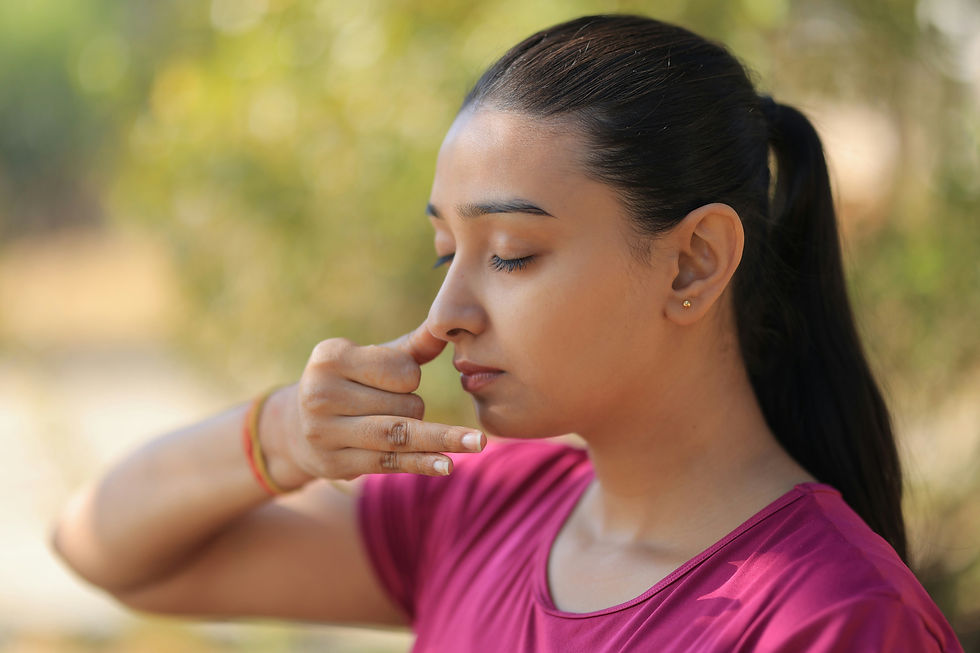
Step 3: 90 Seconds of Box Breathing
Used by clinicians, athletes, and even the U.S. Navy, box breathing regulates the autonomic nervous system and reduces stress hormones.
Try this:
Inhale for 4
Hold for 4
Exhale for 4
Hold for 4
Repeat for 90 seconds.
Research published in Frontiers in Human Neuroscience shows that slow, controlled breathing increases vagal tone, a key marker of nervous system resilience.
Step 4: 60 Seconds of Visual Reset
Your eyes are part of your nervous system. When you’re stressed, your vision narrows (tunnel vision). When you relax, your vision widens.
Try this: Look at something far away, a tree, a wall, the horizon, or even the opposite side of the room. Let your gaze soften.
This “panoramic vision” technique is supported by research from Stanford University showing that widening your visual field reduces sympathetic (stress) activation.
Step 5: 60 Seconds of Stillness
This is where everything integrates.
Sit, stand, or lie down comfortably. Let your breath settle. Notice how your body feels now compared to five minutes ago.
Stillness is not doing nothing, it’s giving your body space to process and release what it’s been holding.
Why This Works (The Science in Simple Terms)
Breath work reduces stress hormones and activates the vagus nerve.
Somatic grounding helps release stored tension and reconnects you to your body.
Visual resets shift your brain out of threat mode.
Stillness allows your nervous system to complete the stress cycle.
This entire reset is based on principles from Polyvagal Theory (Dr. Stephen Porges), somatic psychology, and autonomic regulation research.
When to Use This Nervous System Reset
Use it when you feel:
overwhelmed
overstimulated
tense or tight
mentally foggy
emotionally reactive
stuck in “go mode”
disconnected from your body
Or simply use it as a daily micro‑wellness habit to support long‑term nervous system regulation.
If You Want to Go Deeper
If you’re trying to build a wellness routine that actually fits your life, especially if you feel like you have no time, you’ll love this post: How to Build a Wellness Routine When You Have No Time https://www.wellnessbybelize.com/post/how-to-build-a-wellness-routine-when-you-have-no-time
Common FAQ
What is a nervous system reset?
A nervous system reset is a short, evidence‑based practice that helps your body shift out of stress mode using breathwork, grounding, and sensory regulation. It supports the parasympathetic system — the part responsible for rest, digestion, and recovery.
Does this reset really work in just five minutes?
Yes. Techniques like the physiological sigh, box breathing, and somatic grounding have been shown in research from Stanford University and Frontiers in Human Neuroscience to calm the autonomic nervous system quickly.
When should I use this reset?
Use it anytime you feel overwhelmed, overstimulated, tense, foggy, or stuck in “go mode.” It’s also helpful as a daily micro‑wellness habit to build long‑term nervous system resilience.
Do I need a quiet space or special tools?
Not at all. Every step in this reset can be done at your desk, in your car, between meetings, or during a busy day. It’s designed for real life — not ideal conditions.
Is this routine backed by science?
Yes. This reset draws on research from Dr. Stephen Porges (Polyvagal Theory), Dr. Andrew Huberman (Stanford School of Medicine), and studies on slow breathing and vagal tone published in Frontiers in Human Neuroscience.
Can this help with anxiety or overwhelm?
It can. Breath work, grounding, and visual regulation help signal safety to the brain, which can reduce anxiety symptoms and help you feel more present and regulated.
References
Frontiers in Human Neuroscience. (2017). Effects of Slow Breathing on Autonomic Function. https://www.frontiersin.org/articles/10.3389/fnhum.2017.00425/full
Huberman, A. (2021). The Science of the Physiological Sigh. Huberman Lab Podcast. https://hubermanlab.com
Porges, S. (2011). The Polyvagal Theory: Neurophysiological Foundations of Emotions, Attachment, Communication, and Self-Regulation. https://www.ncbi.nlm.nih.gov/pmc/articles/PMC3108032/ (ncbi.nlm.nih.gov in Bing)
Stanford University School of Medicine. Visual System and Stress Regulation Research. https://med.stanford.edu


Comments